

- This event has passed.
Marxist Psychology: Vygotsky’s Cultural-Historical Theory
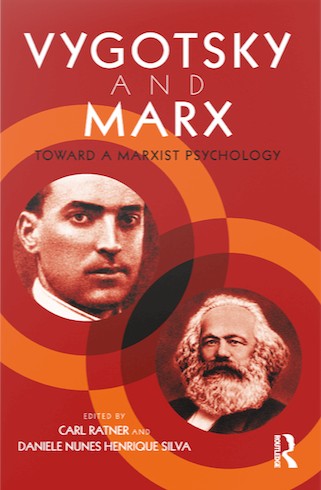
A six-week workshop with Carl Ratner, in which we will seek to solve the riddle Marx posed in his first thesis on Feuerbach: “in contradistinction to materialism, the active side [the subjective side of human behavior] was developed abstractly by idealism – which, of course, does not know real, sensuous activity as such.” Exploring a materialist theory of subjectivity which does know sensuous activity, we will see how historical materialism can be extended to reveal how it is compatible with psychology and how human psychology is itself a historical-materialist phenomenon.
 Bridging political economy and psychology, we will review Marx’s writings on the structure of social systems that encompass cultural emergents such as religion. As emphasized by Wendy Brown in her Foreword to the Reitter-North translation of Capital, “Marx developed an understanding of political economy as the distinctive mode through which we build entire worlds through our singular cooperative powers—transforming nature, elaborating divisions of labor and organizations of ownership, producing wealth, creating ways of life, institutions, social forms, subjects, and subjectivities… Capital brings into being not only particular kinds of markets, technologies, and industries, but classes, families, and political structures; race and gender orders; relations with ‘nature’; new formations of space and time; and legal codes and conflicts.”
Turning to the field of cultural psychology, we will explore how cultural forms stimulate and organize human psychology. Here we will focus on the work of the Russian psychologist, Lev Vygotsky (1896-1934), who formulated a “cultural-historical psychological theory.” Vygotsky was a dedicated Marxist who was active in efforts during the revolutionary period to develop socialist cultural institutions and social sciences. Vygotsky said, “We must learn from Marx’s whole method how to build a science, how to approach the investigation of the mind.” Read more…
Carl Ratner went through college and graduate school in the 1960s. He was a professor of social psychology in the California State University system for 31 years. He adopted Vygotsky’s work when it was first translated in the 1980s, writing extensively on Vygotsky and authoring the Preface to vol. 5 of his Collected Works. Ratner was one of the few followers of Vygotsky who emphasized his Marxist orientation and developed it. Ratner is the author of Macro Cultural Psychology: A Political Philosophy of Mind (Oxford, 2012); his most recent book is Cultural Psychology, Racism, and Social Justice (Springer, 2022). Carl has been active in the cooperative movement and served on the board of directors of California’s largest food coop in the 1970s and 80s. He lived in China from 1981-1983 and taught the first course on social psychology in Peking University since it had been banned after the Revolution.
Registration for this series is now closed.