

- This event has passed.
Immigration and Chicano/Latin American Liberation: Repression & Resistance
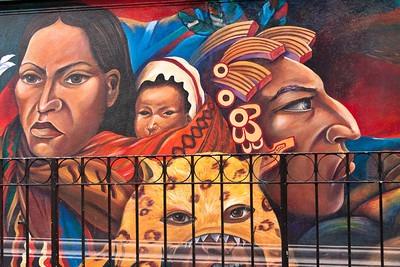
Tuesdays, 7-9 pm ET
Join us for an overview study of the relationship between Mexican immigration and the United States: its colonial foundation, vibrant new communities, cyclical labor exploitation, and state-sanctioned repression, liberation struggles. The Chicano liberation movement emerged as a direct response to this, and its legacy is critical to understanding immigration struggles today and modern nativist and fascist-aligned counter-responses. Convened by the MEP Political Strategy Study Group, including Steve Backman, Fred Murphy, and new volunteers Camilo Pérez-Bustillo and others.
Our primary reading is No One Is Illegal, by Justin Akers Chacon and Mike Davis (Haymarket Books, 2018 Updated Edition). We supplement this with additional recommended readings for which we will provide links or copies, and, based on initial discussion, we may recommend a second book as “primary.”
We have planned for six weeks, optionally extending to eight. Given the richness of the topics and based on interest, we may plan for follow-on study in the spring.
This study continues the long-running “Historical Roots of American Fascism” series and takes it in a new direction. Our historical readings first focused on the 1830s and 1840s counter-revolution of Texan settlers against native peoples, Mexico, and people of Mexican origins with long traditions in the Southwest. This study brings our focus forward to the patterns of life and struggle in the twentieth century and twentieth-first century. Using the lens of Chicano political traditions, we expect it to provide insight on national conditions throughout the US.
We continue to have three points of reference:
- Sources, strengths, and strategies of recurring waves of popular struggle, beginning with the theme of “Abolition Democracy” introduced by W.E.B. Du Bois and now embracing Chicano liberation and other traditions of struggle.
- Evolving forms of reaction and repression, especially their roots in white supremacy and internal settler-colonialism in the Southwest and West.
- Reflections on the present moment in the US, framed by immigration and other pivotal struggles, especially (though not limited to) in California and the Southwest.
We will make available a new syllabus while continuing to update our long-term bibliography of supplementary readings.